


Did you know that behind every LIV by Neher insect catcher sold, a concrete flowering area can be created in Germany? With 40 cents per insect catcher, we support the Flowering Landscape Network (NBL) – an organization that works with passion, expertise and a close-knit network of area partners to counteract the loss of insects in Germany.
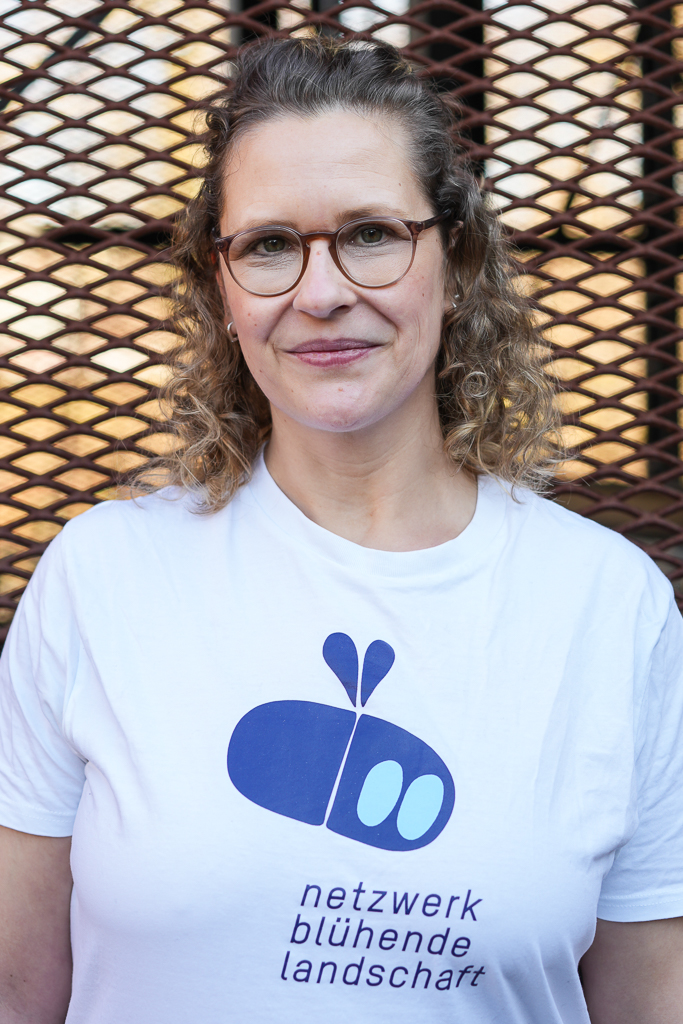
We sat down with Sabrina Von der Heide from BienenBlütenReich-Team and gained exciting insights into her work: What is behind regionally adapted seeds? Why is a single square meter of flowering area not enough – and what can each and every one of us do anyway? And what does it actually mean when a donation creates a habitat for wild bees, butterflies and beetles?
Sabrina, can you briefly explain what the Blühende Landschaft network is all about and what your goals are?
Sabrina: We, the Flowering Landscape Network, have set ourselves the goal of making the entire landscape throughout Germany bloom again in order to counteract the dramatic decline in insects. With our regionally adapted seed mixtures, we create habitats for bees, bumblebees, butterflies and other insects – together with our land partners.
How did you get involved in this project and what drives you as a team?
Sabrina: My colleague Linda (Dr. Trein) called me in summer 2024 and asked me if I could imagine standing in for a colleague during her parental leave. I didn’t have to think twice and said yes. Since then, I’ve been part of the BienenBlütenReich team and take care of corporate collaborations, advise our area partners and am also increasingly involved in public relations work. Our team consists of professionally competent biodiversity consultants. Of course, we are driven by the purpose behind everything we do. We are highly motivated to work sustainably for our insects. And at the same time, we complement each other very well as people. It’s simply fun to pull together and when we go on our annual flowering area tour, where we visit a few of our area partners and their areas, we see bee on flower, so to speak, in black and white, what we have already achieved. That confirms our work.
What motivates you personally to stand up for biodiversity and insect conservation?
Sabrina: It is important to me to finally create the knowledge and self-image in society at large that our insects are neither a nuisance nor that the flowering areas we create are just nice to have and pretty to look at. On the contrary, they are an enormously important part of our livelihood.
Every little contribution counts. And it is precisely this knowledge that motivates me, that every small contribution counts and that it is possible to get people to think and rethink through good communication. Where does the jam on our breakfast table come from, how do we make our coffee, our chamomile or thyme tea or our marigold-based hand cream and the delicious strawberries that can be harvested from our regions during the season? They are not simply conjured out of a black hat and then appear on the supermarket shelves. They have to be grown in good soil and, above all, pollinated in order to produce fruit in the first place. It is this pollination work by our six-legged friends that makes it possible for us to enjoy and manage these products in the first place.
What does it mean in concrete terms when a square meter of flowering meadow is created through donations?
Sabrina: We work with over 200 area partners across Germany. These are farmers or private individuals, parishes and municipalities who have approached us with intrinsic motivation and want to work towards more biodiversity. The donations we receive from private individuals and companies enable us to finance the seeds, hedges, flowering trees and shrubs that the area partners receive from us free of charge. The donations also finance our advisory services. Because simply throwing a few seeds on the field and then waiting for rain unfortunately doesn’t work. We look at which seeds are suitable for the respective area and provide the area partners with precise instructions on implementation and care. There are regionally adapted seeds for insects that are also adapted to specific wildflowers. The viper’s bugloss mason bee, for example, can only occur and reproduce where its food plant, the viper’s bugloss, also flowers. And at the right time. Therefore, a viper’s bugloss from southern Germany may not help the viper’s bugloss mason bees in the north because its flowering time differs too much from their activity period.
What types of plants do you sow there and why these in particular?
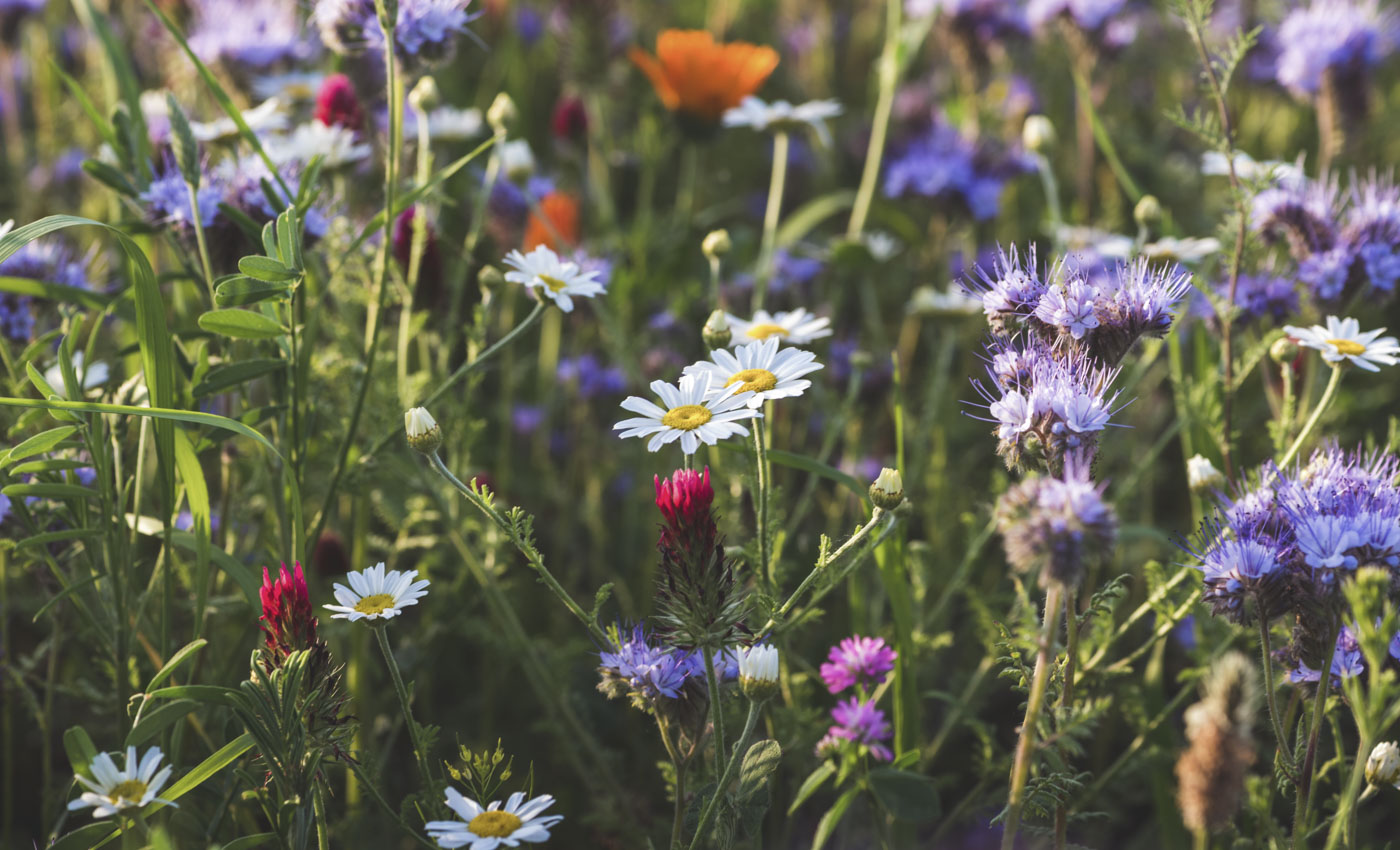
Sabrina: We work with around 10 different seed mixtures, which vary regionally in terms of their species composition and usually contain between 30 and 40 different species. We primarily work with native wild plants, which used to be much more common in our landscape than they are today. Examples of sown plant species are Yarrow(Achillea millefolium), cornflower(Centaurea cyanus),chicory (Cichorium intybus), wild carrot(Daucus carota), viper’s bugloss(Echium vulgare), dost(Origanum vulgare), meadow sage(Salvia pratensis), tansy(Tanacetum vulgare). Marguerite, various species of bellflower, grasses such as sheep’s fescue, crested wheatgrass or smooth oat.
We have a specific composition of seeds of different plants for each region, because “somehow native” is not enough – it is also about genetics and adaptation. Plant populations differ regionally, for example in the time of sprouting, flowering, frost tolerance and drought resistance. In addition, plants and local insect populations are adapted to each other over long periods of time (co-evolution). If plants within a species are introduced from non-matching regions, this can endanger or “mix” the intra-species (genetic) diversity. Protection is easiest to achieve if autochthonous (local) plant material is used (from the same region or nearby natural habitat).
Therefore, be careful when buying seeds, as many commercial seeds from cultivated forms or foreign species may be visually attractive, but only help a few insects – partly because many native insects have adapted to native wild plants, and specialists even require certain groups or species.
Which animals benefit most from a square meter of species-rich flowering area?
Sabrina: This question cannot be answered in terms of square meters, because it is easy to imagine that a square meter of flower meadow can accommodate the plant species inventory of a flower meadow, but cannot take on the overall ecological function. The size of the meadow plays a decisive role in this. The same applies to flowering areas in the field. A square meter is pretty to look at, but only as a strip at least 10 meters wide and as long as possible does the flowering area develop real ecological functions such as habitat, food supply, hibernation area, migration corridor.
What we can prove with figures, however, because there are numerous studies on this: Over 300 species of wild bees and numerous other insects, birds and small mammals benefit from flowering areas in fields.
How do you use the 40-cent donation per insect catcher sold?
Sabrina: In seeds, signage and advice for our area partners who create these flowering areas for us and our donors.
Can you give an example of what such donations make possible in practice?
Sabrina: We often make advance payments for the creation of flowering areas. However, if no more donations come in, then unfortunately our hands are tied, we can’t finance seeds for our area partners and they can’t create areas for wild bees, beetles and butterflies. A donation makes exactly that possible: the creation of food and habitat for our six-legged friends.
In 2025, flowering sponsorships have created 387,000 m² of flowering areas, 45 flowering trees, 1130 m of hedges and 192,000 m² of real flower meadows and borders.
Why are collaborations with small, sustainable brands particularly valuable for you?
Sabrina: These collaborations are very valuable for us because we speak the same language. Sustainable brands are already in the same bubble per se in terms of their corporate DNA and there is not much need to explain why, for example, it is important that we protect insects and enable them to reproduce.
How can other organizations, companies or private individuals support your work?
Sabrina: By taking out a flower sponsorship with us. It’s easy to do at: www.bluehpate.de
But there are also other ways to cooperate with us. Companies can find our portfolio here, for example.
Why do you think long-term partnerships are so important?
Sabrina: Reliability plays a major role in a long-term partnership. The “promise” to nature, to the insects and ultimately also to us is that we will continue to create new habitats – depending on the company partnership – and thus create a Germany-wide mosaic for bees, bumblebees, butterflies and the like.
Every insect catcher sold by LIV by Neher contributes 40 cents directly to this – and thus makes a piece of blooming landscape possible for bees, bumblebees and butterflies. Want to do even more? Go to www.bluehpate.de you can easily sponsor your own flowering plants – and join us in creating a colorful mosaic for our insects